Why do females wear tight clothes?
Why do females wear tight clothes?
The question "Why do females wear tight clothes?" invites an exploration of cultural norms, personal comfort, and modern fashion trends. There are three reasons women are often drawn to fitted clothing. First, it's comfortable and gives you freedom of movement. Choosing a fit that suits your body shape can help with comfort and support during daily activities. Second, a closer cut shows the lines of an outfit clearly, which some people simply prefer aesthetically. Third, wearing what you like tends to make you feel more at ease in your own clothes. For many, fitted clothing is a fashion statement and a form of personal expression. In short, why do women wear tight clothes? It usually comes down to a mix of comfort, confidence, and personal style — not any single reason.

Comfort and freedom of movement
The most common answer is also the least dramatic one: fitted clothes stay where you put them. A knit that skims the body doesn't ride up, twist, or need adjusting every twenty minutes, which matters a great deal if you are commuting, carrying things, chasing a toddler, or on your feet all day. Loose clothing has its own advantages — airflow, ease, a relaxed line — and plenty of people prefer it. Neither choice is more or less valid, and most wardrobes contain both.
Fabric does most of the work here. A four-way stretch knit with a high recovery rate will feel supportive, while the same cut in a woven with no stretch will feel restrictive. That difference is why two garments labelled the same size can feel completely unalike, and it is worth paying more attention to the composition on the label than to the silhouette in the photograph.

What other people think about it
Fitted clothing attracts commentary, and women get a lot of it — from strangers, from family, sometimes from work. That commentary is worth naming because it genuinely shapes what people feel able to wear, but it isn't a reason to dress one way or another. What someone else reads into an outfit says more about them than about the person wearing it, and no cut of clothing invites or excuses unwanted attention.
It's also worth noting that this varies enormously by place and context. Norms that feel absolute in one city are irrelevant in another, and they shift over a decade. The practical upshot is that there's no universal rule to follow, only your own judgement about where you are going and how you want to feel while you're there.

Wanting to be seen
Some people dress to be noticed, and there's nothing complicated about that. Clothing is one of the few things you can change about how you present yourself in a morning, and a bolder outfit can be genuinely enjoyable in the same way that a bright lipstick or a good pair of boots can. Social media has made appearance more visible than it used to be, for better and worse, and that has pushed certain silhouettes into the mainstream faster than they once would have travelled.
Where this gets unhelpful is when it stops being a choice. If you find you're wearing something because you think you're supposed to rather than because you want to, the outfit isn't doing its job. The test is simple: would you still pick it if nobody were going to see it? Sometimes yes, sometimes no — both answers are fine, but the question is worth asking.

Dressing for work
Workplaces have their own conventions, and they are often unwritten, inconsistent, and stricter for women than for men. A fitted silhouette reads as perfectly professional in one office and as inappropriate in another, which is frustrating but real. The practical approach is to read the room rather than a rulebook: look at what people one level above you wear, and calibrate from there.
A good compromise is structure over looseness. A tailored trouser or a ponte knit holds a clean line without clinging, which tends to satisfy a conservative dress code while still being comfortable enough to sit in for eight hours.

Because it makes them feel confident
Feeling good in your clothes can give you a real boost. Plenty of women find a fitted cut makes them feel put-together and self-assured, and that shows in how they carry themselves. It's worth remembering, though, that feeling good in your clothing means finding a style you actually like rather than copying what everyone else is doing. If something doesn't make you feel good, it isn't worth owning. As long as you like how a garment fits, nobody else's opinion needs to come into it. What matters is not only how you look but how you feel.

The whole purpose of choosing certain garments is to feel comfortable and express your own style, regardless of what anyone else thinks. Clothes have to fit well and make you happy — otherwise they sit in the wardrobe unworn. Most importantly, know yourself: every body is different, and no two people are alike. There will always be trends, but there are no rules about building a wardrobe that suits you. Do what makes you happy, whether that means living in jeans or never wearing them.

Silhouette and proportion
Some people like what a fitted cut does to the line of an outfit, and that's a design preference rather than anything deeper. A close-cut top with a wide-leg trouser, or a fitted dress with a structured jacket, creates a contrast that many find more interesting than one volume throughout. This is the same reasoning a tailor uses, and it has nothing to do with making anyone look smaller.
If you're after a particular line, the useful variables are rise, hem length and fabric weight, not size. A high rise lengthens the leg in a photograph; a heavier fabric holds its own shape instead of following yours; a hem that ends at the narrowest part of the calf reads differently from one that ends at the widest. These are levers you can actually pull, and they work on every body.

Training and activewear
If you lift, run, cycle or do anything where clothing can get in the way, fitted kit is mostly a practical decision. Loose fabric catches on equipment, rides up during floor work, and flaps when you run. Compression fabrics also offer mild support, and many people find they help with the feeling of muscle fatigue on longer sessions. Plenty of lifters also simply enjoy seeing the work they've put in, which is a perfectly good reason on its own.
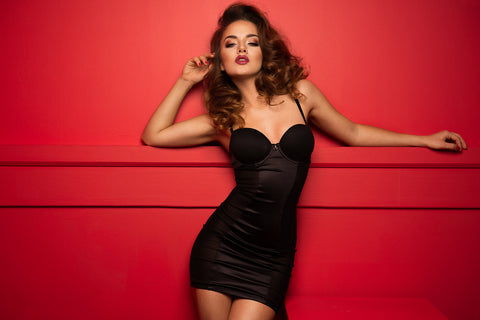
Dressing for your shape
Clothes fit differently on different bodies, and figuring out what you like on yours takes some trial and error. A cut that looks and feels great on one person can feel wrong on another, and that's about proportion and fabric rather than about either body being the correct one. The only reliable method is trying things and paying attention to which garments you actually reach for.

One thing that trips people up is assuming a size runs true across a wardrobe. It rarely does. Stretch content, cut and brand all move the goalposts, so a 12 in a woven skirt and a 12 in a jersey dress can fit nothing alike. Going by measurements rather than by the label removes most of that guesswork, and it's the single change that makes buying clothes online less frustrating.
Fitted clothing is worn for many different reasons — making a fashion statement, expressing personal style, feeling comfortable, moving freely, and suiting the shape of the person wearing it.
Finding a fit that feels right: whether you prefer something fitted or relaxed, the fit matters more than the size on the label. Our size chart lists real bust, waist and hip measurements so you can order from your numbers, in sizes XS to 3XL. This store is East Hills Casuals, and free shipping starts at $50.
Introduction: Why Do Women Wear Tight Clothes?
Fashion is more than just what we wear — it's a reflection of our personalities, lifestyles, and the world around us. In recent years, fitted clothes have become a defining trend in women's fashion, with many women treating fitted trousers, leggings and other close-cut garments as everyday staples. The popularity of fitted clothing can be seen everywhere, from city streets to social media feeds, and it's clear that this trend is here to stay. But what drives so many women to choose a closer cut over a looser one? The answer lies in a mix of comfort, versatility, and the way these clothes follow the body's natural shape. Whether it's for the gym, a night out, or simply running errands, fitted clothes offer a blend of style and practicality that appeals to women of all ages. In this article, we look at the psychological, cultural, and functional factors that make this trend so enduring.

A Historical Perspective on Women's Fashion
The fascination with fitted clothes is not a new phenomenon. Throughout history, women's fashion has often featured close-cut garments, from the corsets and bodices of centuries past to the skinny jeans and leggings of today. In earlier times, women wore genuinely restrictive garments to achieve the fashionable silhouettes of their era, frequently at real cost to comfort and health. Those garments were treated as markers of femininity and social status, shaping not only the body but also the prevailing ideas about what bodies should look like. As fashion evolved, materials and construction improved, and it became possible to have a close fit without the restriction. Today many women wear fitted trousers, leggings and other close-cut clothing as a way to express personal style while keeping full freedom of movement — which is the part earlier eras never managed.

Psychological Insights: The Appeal of Fitted Clothing
The reasons many women are drawn to fitted clothes go beyond following the latest trends. What you wear has a measurable effect on how you feel, and a garment you like can make the rest of the day easier. For many, putting on a favourite pair of trousers or a dress that fits properly is about feeling capable and at ease rather than about appearance alone. Choosing what to wear is also a form of self-expression — a way to show something of your personality and taste before you've said a word. The appeal is ultimately personal, tied to how a garment makes the wearer feel rather than to any external standard.
Cultural Influences and Societal Norms
Cultural trends and social expectations play a major role in shaping how women dress, especially where fitted clothing is concerned. In some places a close cut is unremarkable; in others it draws comment. The influence of media and social media has made fitted trousers, leggings and similar garments thoroughly mainstream, with the styles visible online setting much of the tone for what reads as current. The rise of athleisure has also blurred the line between workout wear and everyday clothing, which is how leggings went from gym kit to a default. As a result, what was once reserved for the gym is now a common sight in daily life, and the range of what's considered normal has widened considerably.

Functional Aspects: Comfort, Utility, and Performance
Beyond style and culture, the functional benefits of fitted clothes are a big reason so many women choose them. Fitted trousers, leggings and similar garments are often made from breathable fabrics that provide comfort and flexibility through a long day. Many women find a closer fit allows greater ease of movement, whether they're training, running errands, or relaxing at home. Compression fabrics can also offer gentle support and help with the feeling of muscle fatigue. The versatility matters too: the same pair of trousers can read casual or smart depending on what goes with them, which makes them a practical thing to own. With modern fabric technology, fitted clothing now offers a balance of comfort, utility and style that earlier generations of the same silhouette never could.
Shop Women's Clothing at East Hills Casuals
Sizes XS to 3XL with real measurements on every page — so you order from numbers, not guesswork. Free shipping over $50 and easy 30-day returns.
Not sure of your size? Our size chart lists bust, waist and hip in inches and centimetres, plus a denim conversion for the 0(24)–24W run.