Everlane vs East Hills Casuals: Is Everlane Good Quality?
Everlane vs East Hills Casuals: Is Everlane Good Quality?
Let's be real for a second—scrolling through Instagram and seeing all those influencers rocking "sustainable" fashion makes you wonder: are these brands actually saving the planet, or just really good at marketing? If you've been eyeing Everlane's minimalist basics or East Hills Casuals' trendy backpacks, you're probably asking yourself the big questions: is Everlane good quality, is Everlane fast fashion, and what's the deal with Everlane greenwashing claims?
I've been down this rabbit hole myself. Last year, I spent way too much money on what I thought were "eco-friendly" clothes, only to find out some brands were basically just slapping green labels on the same old stuff. So I did the deep dive on Everlane and East Hills Casuals to figure out what's actually worth your hard-earned cash and what's just clever marketing. Spoiler alert: the truth is way more complicated than you'd think.
Key Takeaways
- Everlane focuses on transparent pricing and minimalist basics, but faces ongoing scrutiny about greenwashing claims and whether their sustainability efforts match their marketing
- Quality varies between brands: Everlane emphasizes long-lasting capsule wardrobe pieces, while East Hills Casuals prioritizes functional, stylish casual wear with sustainable materials
- Neither brand is perfect: Both have sustainability strengths and weaknesses that conscious shoppers need to understand before buying
- True sustainable fashion requires research: Looking beyond marketing claims to actual certifications, materials, and manufacturing practices is essential
- Price doesn't always equal sustainability: Higher costs don't automatically mean better environmental impact or ethical production
What Makes Clothing "Sustainable" Anyway? 🌱
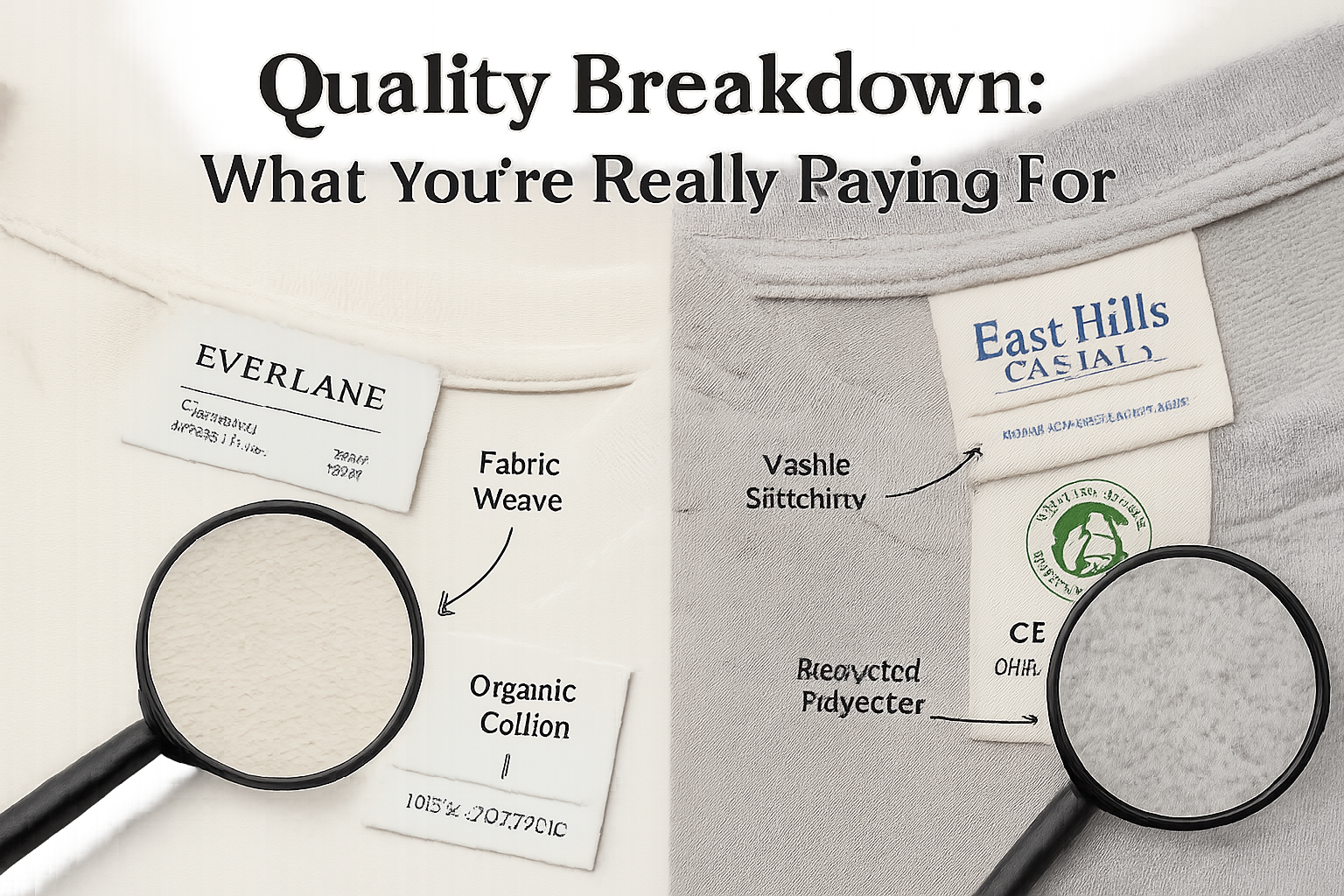
Before we dive into comparing Everlane and East Hills Casuals, let's talk about what sustainable fashion actually means—because honestly, it's become such a buzzword that it's lost some meaning.
Sustainable women's clothing should check several boxes:
- Materials matter: Organic textiles, recycled clothing fibers, and regenerative agriculture fabrics that don't destroy the planet
- Ethical production: Fair trade fashion practices, transparent supply chain operations, and workers getting paid fairly
- Longevity: Clothes that last years, not months (hello, slow fashion movement!)
- Carbon footprint reduction: Brands actively working toward carbon neutral fashion or climate positive clothing
- Circular fashion: Designing clothes that can be recycled or composted at end-of-life
The problem? Lots of brands claim to be "eco-friendly fashion" without actually doing the work. That's where greenwashing comes in—making environmental claims that sound great but don't hold up under scrutiny.
The Greenwashing Problem
Here's something that really gets me fired up: greenwashing is EVERYWHERE in fashion right now. Brands slap "sustainable" on their tags, use green packaging, and talk about "conscious fashion" while their actual practices haven't changed much at all.
According to environmental research, the fashion industry produces about 10% of global carbon emissions and is the second-largest consumer of water worldwide[1]. When brands don't provide transparent manufacturing processes or third-party certifications, it's a major red flag.

Is Everlane Good Quality? Breaking Down the Basics
Let's tackle the first big question: is Everlane good quality?
Everlane built its reputation on "radical transparency" and quality basics that supposedly last forever. They offer everything from structured blazers to versatile t-shirts, with celebrities like Reese Witherspoon and Jennifer Garner rocking their minimalist designs[1].
What Everlane Gets Right
The Good Stuff:
- Detailed product information: Everlane tells you exactly how each fabric stretches, wears, and ages—which is honestly pretty rare
- Quality construction: Their basics are designed for capsule wardrobes, focusing on pieces you'll wear for years
- Transparent pricing: They break down the cost of materials, labor, and transportation (though this doesn't automatically make them sustainable)
- Celebrity-approved: When A-listers consistently wear a brand, it usually means the quality holds up[1]
I bought an Everlane t-shirt two years ago, and I'm not gonna lie—it still looks basically new. The fabric hasn't pilled, the seams are solid, and it's survived countless washes. For a basic tee, that's pretty impressive.
Where Everlane Falls Short
But here's where things get tricky. Quality doesn't automatically equal sustainability, and Everlane has faced serious criticism about their environmental claims.
The Not-So-Good:
- Sizing challenges: You need to read fit information carefully because their clothes can run differently than expected[1]
- Price point: Quality basics aren't cheap, which can be a barrier for younger shoppers
- Limited style range: If you're not into minimalist aesthetics, Everlane might feel boring
For those looking to build a versatile wardrobe foundation, understanding what essentials every woman needs can help you decide if Everlane's minimalist approach fits your style.

Is Everlane Fast Fashion? Understanding the Difference
Now for the million-dollar question: is Everlane fast fashion?
Fast fashion refers to cheap, trendy clothes produced rapidly to keep up with constantly changing styles. Think: buying a $5 shirt, wearing it three times, and tossing it. The environmental impact is MASSIVE—fast fashion creates tons of textile waste and relies on exploitative labor practices.
Everlane's Positioning
Everlane positions itself as the opposite of fast fashion. They focus on:
- Timeless designs instead of trend-chasing
- Quality over quantity (higher prices, but supposedly longer-lasting)
- Transparent manufacturing (they share factory information)
- Sustainable materials in some product lines, like their ReNew collection made from recycled polyester[4]
Based on these factors, Everlane isn't technically fast fashion. They're not pumping out weekly trend drops or selling $5 tops. Their whole vibe is about buying less but buying better.
The Gray Area
BUT (and this is a big but), just because something isn't fast fashion doesn't mean it's truly sustainable. Everlane produces new items regularly, encourages consumption through marketing, and doesn't have a comprehensive take-back or recycling program.
The slow fashion movement asks us to buy way less overall—even quality pieces. So while Everlane is definitely better than Forever 21, they're not exactly zero waste fashion either.

Everlane Greenwashing: Separating Facts from Marketing 🔍
This is where things get really interesting. Everlane greenwashing accusations have followed the brand for years, and understanding why matters if you care about where your money goes.
The Transparency Paradox
Everlane's whole brand is built on transparency—they show you their factories, break down costs, and talk about sustainability. But in 2020, workers accused the company of union-busting and firing employees who spoke up about working conditions[1]. That's... not exactly ethical production standards.
Red flags to watch for:
- Marketing that emphasizes sustainability without third-party certifications
- Vague claims like "eco-friendly" without specific data
- Highlighting one sustainable product line while the rest of the collection isn't
- Lack of clear carbon neutrality commitments or environmental impact data
What Real Sustainability Looks Like
Truly sustainable brands provide:
- Third-party certifications (like B Corp, Fair Trade, GOTS for organic textiles)
- Detailed sustainability reports with actual carbon footprint calculations
- Transparent supply chain documentation showing every step of production
- Worker welfare information including wages and working conditions
- End-of-life solutions like recycling programs or circular fashion initiatives
Everlane has some of these elements but not all. Their ReNew collection uses recycled materials, which is great[4]. But they've been criticized for not going far enough on labor practices and lacking comprehensive environmental commitments.
If you're interested in learning more about sustainable materials, check out this guide on eco-friendly fabrics to understand what makes textiles truly green.

East Hills Casuals: The Sustainable Alternative?
So where does East Hills Casuals fit into this conversation?
East Hills Casuals takes a different approach than Everlane. Instead of minimalist basics, they focus on functional, stylish casual wear with an emphasis on sustainability and quality[4]. Their product line includes fashionable backpacks, casual clothing, and accessories that combine urban street style with practical features.
East Hills Casuals' Sustainability Approach
What sets them apart:
- Emphasis on sustainable materials across product lines
- Quality construction with features like padded straps and durable compartments
- Practical design that encourages long-term use (like backpacks with laptop compartments and multiple organizational sections)[4]
- Transparent product information focusing on functionality and materials
While East Hills Casuals might not have the same celebrity following as Everlane, they're building a reputation for environmentally friendly apparel that actually serves real-world needs. Their backpacks, for example, are designed to last through years of daily use—which is way more sustainable than buying cheap bags that fall apart.
Comparing Quality and Value
When comparing quality between the brands:
Everlane strengths:
- Minimalist aesthetic perfect for capsule wardrobes
- Detailed sizing information and fit guides[1]
- Wide range of basics and workwear
- Celebrity endorsements and brand recognition
East Hills Casuals strengths:
- Focus on functional design for everyday life
- Specialized expertise in casual wear and accessories[4]
- Competitive pricing without sacrificing quality
- Commitment to sustainable practices
For style inspiration on making the most of casual pieces, the East Hills Casuals blog offers tons of tips on creating versatile, sustainable outfits.

The True Cost of Sustainable Fashion 💰
Let's talk money, because sustainable fashion can feel EXPENSIVE—and that's a real barrier, especially for teens and young women on budgets.
Why Sustainable Clothing Costs More
There are legit reasons why eco-friendly fashion brands charge more:
- Better materials: Organic cotton, recycled polyester, and regenerative agriculture fabrics cost more to produce
- Fair wages: Ethical fashion production means paying workers fairly, which increases costs
- Smaller production runs: Slow fashion brands don't benefit from massive economies of scale
- Environmental investments: Carbon neutral fashion requires investing in renewable energy, carbon offsets, and cleaner production methods
- Quality construction: Clothes designed to last years require better craftsmanship
Making Sustainable Fashion Affordable
Here's the thing: you don't have to buy everything new or from expensive sustainable brands to reduce your environmental impact.
Budget-friendly sustainable fashion strategies:
- Buy secondhand: Thrifting is the ultimate sustainable choice (and way cheaper!)
- Invest in versatile pieces: One quality item you wear 100 times beats 10 cheap items you wear once
- Care for your clothes: Proper washing and storage extends clothing life dramatically
- Support accessible sustainable brands: Companies like East Hills Casuals offer quality sustainable options at more reasonable prices[4]
- Calculate cost-per-wear: A $60 shirt worn 60 times costs $1 per wear; a $10 shirt worn twice costs $5 per wear
If you're looking for budget-friendly style ideas, this article on thrift store finds shows how to shop sustainably without breaking the bank.
For tips on making your current wardrobe last longer, check out these clothing care tips that'll save you money and reduce waste.
Environmental Impact: The Numbers You Need to Know 📊
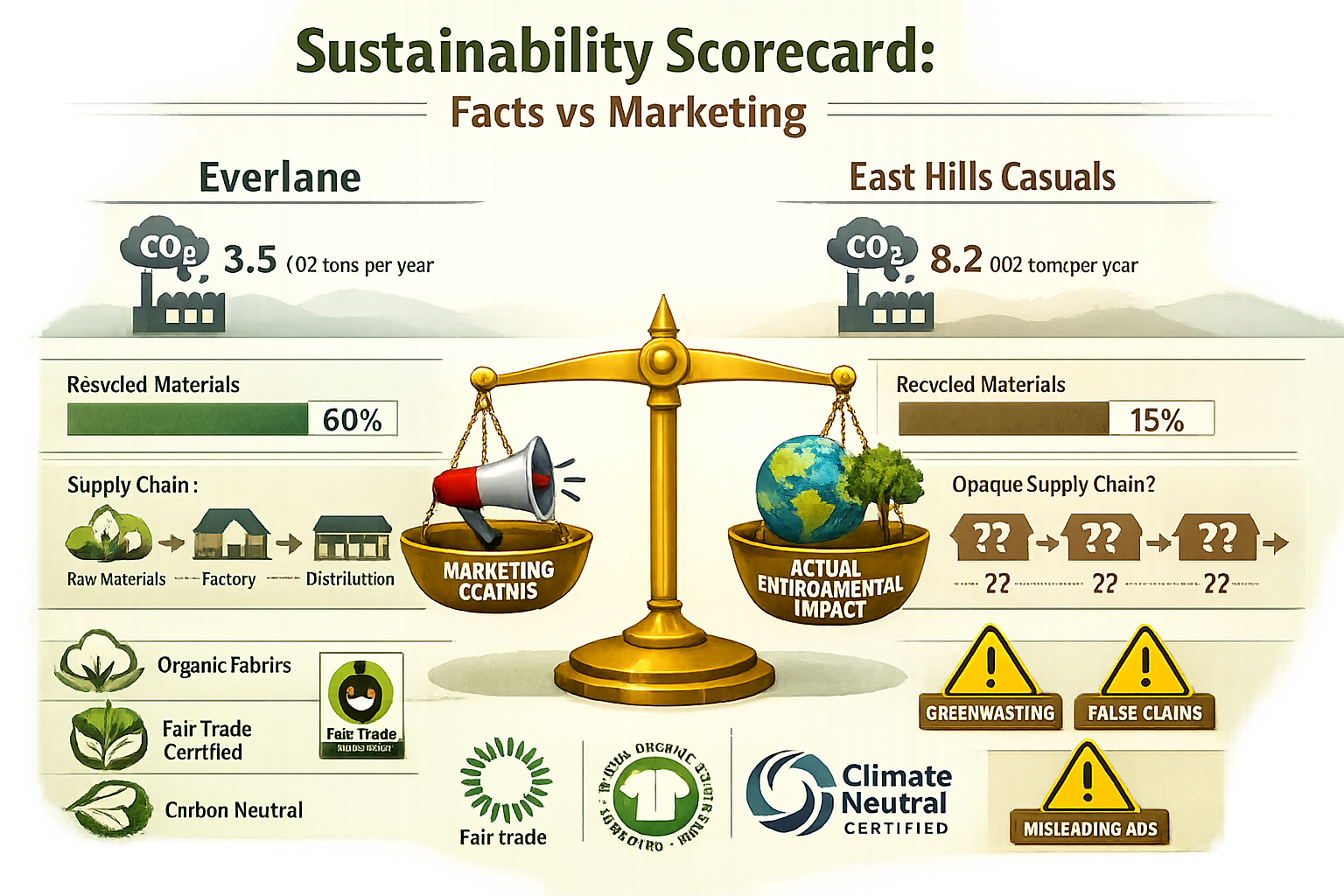
Let's get into the actual environmental impact data, because feelings don't matter as much as facts when it comes to climate change.
Fashion's Carbon Footprint
The fashion industry's environmental impact is HUGE:
- 10% of global carbon emissions come from fashion production[1]
- 1,800 gallons of water are needed to produce one pair of jeans
- 85% of textiles end up in landfills each year
- Microplastic pollution from synthetic fabrics is contaminating oceans
When brands talk about carbon neutral fashion or climate positive clothing, they should be providing specific data about:
- Total carbon emissions from their supply chain
- Reduction strategies they're implementing
- Carbon offset programs (and whether they're actually effective)
- Progress toward net-zero goals with timelines
Material Science Matters
Not all "sustainable" materials are created equal. Here's the breakdown:
Truly sustainable fabrics:
- Organic cotton: Grown without pesticides, uses less water
- Recycled polyester: Keeps plastic out of landfills (though still sheds microplastics)
- Tencel/Lyocell: Made from sustainably harvested wood pulp
- Hemp: Requires minimal water and no pesticides
- Recycled wool: Reduces need for new animal fiber production
Greenwashing red flags:
- "Bamboo fabric" (usually heavily processed with chemicals)
- "Vegan leather" (often just plastic)
- "Eco-friendly" without specific material details
Both Everlane and East Hills Casuals use recycled polyester in some products[4], which is a positive step. But the most sustainable choice is always buying less overall and choosing natural, biodegradable fibers when possible.

Consumer Behavior: How to Shop Sustainably in 2026
🛍
️
Okay, so you want to shop more sustainably—but how do you actually DO that without getting overwhelmed or falling for greenwashing?
The Sustainable Shopping Framework
Before buying anything, ask yourself:
- Do I actually need this? (Be honest!)
- Will I wear it at least 30 times? (The 30-wear rule is a game-changer)
- Can I afford the cost-per-wear? (Not just the upfront price)
- What's it made from? (Check the materials tag)
- Who made it? (Look for transparency about workers and factories)
- What happens at end-of-life? (Can it be recycled, donated, or composted?)
Red Flags vs. Green Lights
RED FLAGS (possible greenwashing):
- ❌ Vague sustainability claims without data
- ❌ No information about workers or factories
- ❌ "Eco-collection" while rest of brand is conventional
- ❌ No third-party certifications
- ❌ Excessive new product launches (even if "sustainable")
GREEN LIGHTS (likely authentic):
- ✅ Specific environmental data and goals
- ✅ Third-party certifications (B Corp, Fair Trade, etc.)
- ✅ Transparent supply chain information
- ✅ Worker welfare programs
- ✅ Take-back or recycling programs
- ✅ Commitment to reducing production over time
Building a Sustainable Wardrobe
The most sustainable wardrobe is one you already own. Seriously! Before buying new sustainable pieces:
- Audit your current closet: What do you actually wear?
- Identify gaps: What's missing that would make existing pieces more versatile?
- Create a wish list: Wait 30 days before buying anything on it
- Research thoroughly: Compare brands, read reviews, check certifications
- Buy intentionally: Choose versatile, high-quality pieces you'll love for years
For inspiration on building a versatile wardrobe, check out these style tips for confidence that work with what you already own.

The Future of Sustainable Fashion: What's Next? 🔮
The sustainable fashion landscape is evolving FAST. Here's what to watch for in 2025 and beyond:
Emerging Technologies
Innovation happening right now:
- Lab-grown materials: Leather and silk created without animals
- Carbon-capturing fabrics: Textiles that actually remove CO2 from the atmosphere
- Biodegradable synthetics: Performance fabrics that break down naturally
- Blockchain transparency: Tracking every step of production digitally
- AI-powered sizing: Reducing returns and waste through better fit prediction
Industry Shifts
The fashion industry is facing pressure from multiple directions:
- Consumer demand: Gen Z and Millennials increasingly prioritize sustainability
- Regulatory requirements: Governments implementing stricter environmental standards
- Investor pressure: ESG (Environmental, Social, Governance) metrics affecting funding
- Climate reality: Extreme weather disrupting supply chains and forcing adaptation
Brands that don't adapt to these changes won't survive. The question is whether companies like Everlane will lead the charge or just do the minimum to stay relevant.
What You Can Do
Your power as a consumer:
- Vote with your wallet: Support brands with authentic sustainability commitments
- Demand transparency: Ask brands questions about their practices
- Share information: Help friends understand greenwashing vs. real sustainability
- Advocate for change: Support legislation requiring environmental accountability
- Embrace imperfection: You don't have to be perfect—just better than yesterday
The East Hills Casuals news section regularly covers emerging sustainable fashion trends and helps shoppers make informed decisions.

Making Your Choice: Everlane, East Hills Casuals, or Something Else?
So after all this, which brand should you choose?
Choose Everlane if:
- You love minimalist, timeless aesthetics
- You're building a capsule wardrobe of basics
- You can afford higher price points
- You want detailed fit and sizing information
- You're okay with some sustainability gray areas
Choose East Hills Casuals if:
- You prioritize functional, practical design
- You want sustainable options at accessible prices
- You need quality casual wear and accessories
- You value brands focused on everyday wearability
- You appreciate transparent sustainability efforts
Choose something else if:
- You want certified sustainable brands (look for B Corp, Fair Trade)
- You prefer secondhand shopping (the most sustainable option!)
- You need more affordable options (thrifting, clothing swaps)
- You want specialized sustainable brands for specific items
My Personal Take
Honestly? I think the "perfect" sustainable brand doesn't exist. Both Everlane and East Hills Casuals have strengths and weaknesses. What matters most is:
- Buying less overall (even from sustainable brands)
- Choosing quality over quantity
- Caring for what you own to extend its life
- Staying informed about greenwashing tactics
- Supporting brands moving in the right direction (even if they're not perfect yet)
I've started mixing secondhand finds with intentional purchases from brands like East Hills Casuals that balance sustainability with accessibility. It's not perfect, but it's way better than my old habit of buying cheap fast fashion every week.

Conclusion: The Bottom Line on Quality, Fast Fashion, and Greenwashing
Let's wrap this up with the real talk you came here for.
Is Everlane good quality? Generally yes—their basics are well-made and designed to last, though you need to pay attention to sizing details and expect to pay premium prices.
Is Everlane fast fashion? No, not in the traditional sense. They focus on timeless pieces rather than trend-chasing. But they're not a zero-waste, truly circular fashion brand either.
Is Everlane greenwashing? It's complicated. They have some genuine sustainability initiatives (like recycled materials) but have faced valid criticism about labor practices and incomplete environmental commitments. They're better than fast fashion but not as sustainable as their marketing sometimes suggests.
The truth is, sustainable fashion isn't black and white. It's a spectrum, and most brands (including Everlane and East Hills Casuals) fall somewhere in the middle. The key is educating yourself, asking questions, and making the best choices you can with the information and budget you have.
Your Next Steps
Ready to shop more sustainably? Here's what to do:
- Audit your closet this weekend—what do you actually wear?
- Research before buying—check materials, certifications, and reviews
- Start small—replace one item at a time with sustainable alternatives
- Care for what you own—proper washing and storage extends clothing life
- Share what you learn—help friends make better choices too
- Stay curious—the sustainable fashion landscape keeps evolving
Remember: you don't have to be perfect. Every small step toward more conscious fashion choices makes a difference. Whether you choose Everlane, East Hills Casuals, secondhand shopping, or a mix of everything, what matters is that you're thinking critically about your purchases and their impact.
Now go forth and shop smarter! 🌍✨
Shop Women's Clothing at East Hills Casuals
Sizes XS to 3XL with real measurements on every page — so you order from numbers, not guesswork. Free shipping over $50 and easy 30-day returns.
Not sure of your size? Our size chart lists bust, waist and hip in inches and centimetres, plus a denim conversion for the 0(24)–24W run.