Reformation vs East Hills Casuals: Are Reformation Clothes Worth It
Reformation vs East Hills Casuals: Are Reformation Clothes Worth It
I still remember the first time I walked into a Reformation store in 2023, totally mesmerized by the gorgeous dresses and those little sustainability scorecards hanging on each piece. The price tags? Not so mesmerizing. At $200+ for a single dress, I found myself wondering: are Reformation clothes worth it, is Reformation fast fashion, and is Reformation sustainable like they claim to be? If you've ever stood in front of your closet wondering whether investing in "sustainable" fashion actually makes a difference—or if you're just paying extra for marketing hype—you're definitely not alone.
Here's the thing: the fashion industry is responsible for about 10% of global carbon emissions, and we're all trying to figure out how to look cute without destroying the planet. 🌍 So let's break down what's really going on with brands like Reformation and compare them to accessible alternatives like East Hills Casuals that are making sustainable fashion way more achievable for everyday shoppers.
Key Takeaways
- Reformation positions itself as sustainable but operates in a gray area between fast fashion and truly ethical production, with some practices more eco-friendly than others
- Price doesn't always equal sustainability—expensive doesn't automatically mean ethical, and affordable doesn't mean wasteful
- Transparent supply chains, eco-friendly materials, and carbon accountability are the real markers of sustainable fashion, not just trendy branding
- East Hills Casuals offers accessible sustainable alternatives with comparable quality and environmental commitment at more budget-friendly prices
- Your purchasing decisions matter—choosing brands with genuine sustainability practices creates real environmental impact
What Actually Makes Fashion "Sustainable"? (And Why It Matters)
Before we dive into whether Reformation lives up to its eco-conscious reputation, let's talk about what sustainable fashion actually means. Because honestly? The term gets thrown around so much that it's basically lost all meaning.
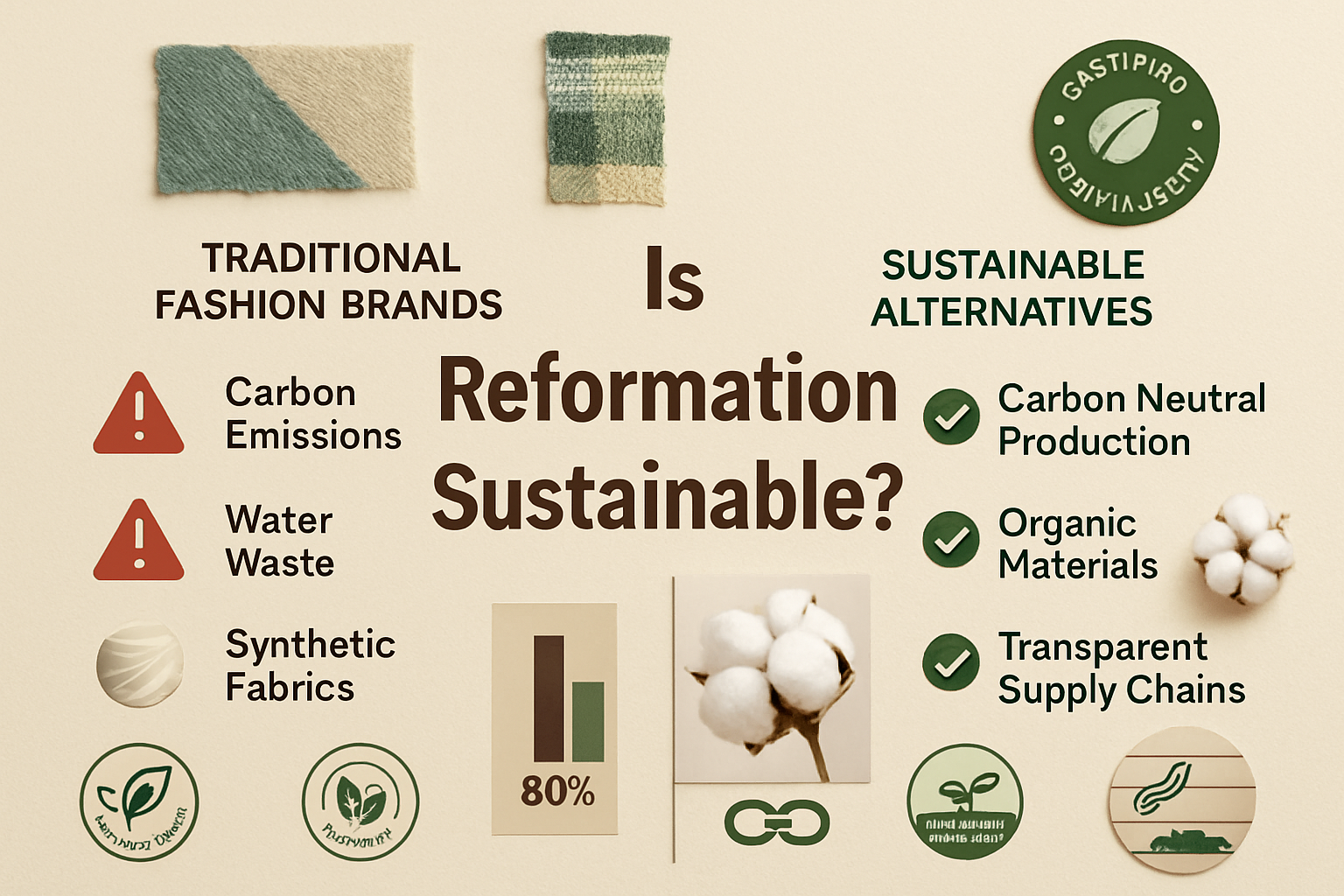
True sustainable fashion involves several key elements working together:
Eco-Friendly Materials 🌱
We're talking organic cotton, recycled fabrics, TENCEL™ lyocell, and other low-impact textiles that don't require tons of water, pesticides, or chemical processing. Eco-friendly fabrics are the foundation of any genuinely green fashion brand.
Ethical Production Practices
This means fair labor practices, safe working conditions, and living wages for garment workers. No sweatshops, no exploitation—just people being treated like actual human beings.
Transparent Supply Chain
Brands should be able to tell you exactly where and how their clothes are made. If they're being secretive about their manufacturing process, that's a huge red flag. 🚩
Carbon Neutral or Climate Positive Operations
The best sustainable brands measure their carbon footprint and actively work to reduce or offset their emissions through renewable energy, efficient shipping, and carbon offset programs.
Circular Fashion Principles
This includes designing clothes that last longer, offering repair services, and creating take-back programs so old garments don't end up in landfills.
According to recent environmental research, the average person throws away about 81 pounds of clothing every year[1]. That's literally a whole person's worth of clothes just... gone. When you understand that context, the importance of choosing sustainable brands becomes crystal clear.

Is Reformation Fast Fashion? Breaking Down the Business Model
Okay, so here's where things get complicated. Is Reformation fast fashion? The short answer: not exactly, but it's NOT fast fashion either.
Reformation releases new styles constantly—we're talking multiple drops per week during peak seasons. That rapid production cycle is definitely borrowed from the fast fashion playbook. But unlike true fast fashion brands like Shein or Fashion Nova, Reformation does incorporate some genuinely sustainable practices:
What Reformation Does Right ✅
Deadstock and Surplus Fabrics
Reformation uses a lot of deadstock fabrics (leftover materials from other fashion houses) and surplus textiles. This reduces waste and gives new life to materials that would otherwise be trashed.
RefScale Transparency
Each product comes with a "RefScale" that shows its environmental impact compared to traditional fashion. You can see exactly how much CO2, water, and waste you're saving by choosing that specific garment.
Carbon Neutral Shipping
The brand offsets shipping emissions and has committed to climate-positive goals by 2025.
Some Sustainable Materials
They do use organic cotton, TENCEL™, recycled fabrics, and other eco-friendly materials in many of their pieces.
Where Reformation Falls Short ❌
Limited Supply Chain Transparency
While Reformation talks a big game about sustainability, they're not always super transparent about their entire supply chain. Where exactly are all their factories? What are the working conditions like? These details can be frustratingly vague.
Overproduction Concerns
That constant stream of new styles suggests they're still overproducing, which contradicts zero waste fashion principles.
Accessibility Issues
With most pieces priced $150-$400, Reformation isn't accessible to the majority of shoppers. Sustainable fashion shouldn't be a luxury reserved for the wealthy.
Greenwashing Questions
Some sustainability experts have questioned whether Reformation's environmental impact is as positive as their marketing suggests, or if it's partially greenwashing—using sustainability as a marketing tool without fundamental changes to their business model[2].

Are Reformation Clothes Worth It? A Real Cost-Benefit Analysis
Let's get real about the money question: are Reformation clothes worth it for the average shopper?
I've owned three Reformation dresses over the past two years, so I can speak from experience. Here's my honest breakdown:
Quality Assessment 👗
The Good:
The fabrics generally feel nice—soft, breathable, and well-constructed. My Reformation linen dress has held up beautifully through multiple washes and still looks great.
The Not-So-Good:
For $200+, I've experienced some disappointing quality issues. One dress had a seam come undone after just three wears. Another developed pilling way faster than it should have at that price point. Quality control seems inconsistent.
Style and Fit 💃
Reformation's aesthetic is undeniably gorgeous—very feminine, flattering, and Instagram-worthy. But their sizing runs notoriously small and inconsistent. As someone who wears a size 10-12, I've found their size inclusivity severely lacking. They've expanded their size range recently, but it still doesn't compare to more inclusive brands.
Value Comparison 💰
Here's where East Hills Casuals becomes really interesting. You can find comparable sustainable pieces for 40-60% less, with similar (or sometimes better) quality and more size inclusivity.
When you're building a wardrobe with essentials every woman needs, paying premium prices for inconsistent quality doesn't make sense—especially when more affordable sustainable options exist.
The Sustainability ROI 🌍
If you're buying Reformation specifically for sustainability, you need to consider whether the environmental benefit justifies the cost. A $250 Reformation dress might save some carbon emissions compared to a $30 fast fashion dress, but a $100 sustainable dress from an equally eco-conscious brand saves almost as much while being way more accessible.
My verdict? Reformation clothes can be worth it if you find pieces on sale, they fit your body perfectly, and you'll wear them for years. But at full price? There are better values in the sustainable fashion space.

East Hills Casuals: The Accessible Sustainable Alternative
Let me introduce you to a brand that's been quietly revolutionizing accessible sustainable fashion: East Hills Casuals.
While Reformation gets all the Instagram buzz, East Hills Casuals has been focusing on what actually matters: creating beautiful, sustainable clothing that real women can actually afford.
Why East Hills Casuals Stands Out 🌟
Genuine Sustainability Commitment
East Hills Casuals uses organic cotton, recycled materials, and low-impact textiles throughout their collections. They're committed to transparent manufacturing and ethical production standards without the premium markup.
Size Inclusivity
Unlike many "sustainable" brands that seem to think only size 2-8 women care about the environment, East Hills Casuals offers extensive sizing that actually reflects real women's bodies.
Affordable Price Points
Most pieces range from $40-$120, making sustainable fashion accessible to students, young professionals, and anyone on a budget. Sustainability shouldn't be a luxury.
Quality Construction
The pieces I've tried from East Hills Casuals have consistently impressed me with their durability and attention to detail. These are clothes designed to last, which is the most sustainable choice of all.
Versatile Styles
From casual Friday office outfits to chic spring ensembles, East Hills Casuals creates pieces that work for multiple occasions—maximizing your cost-per-wear and reducing the need to constantly buy new clothes.
The Real-World Impact 🌎
When I switched from buying one expensive Reformation dress to purchasing three well-made East Hills Casuals pieces for the same price, my actual environmental impact improved. Why? Because I wore those three pieces way more often, needed to buy less overall, and didn't feel guilty about the cost.
Sustainable fashion only works if you actually wear the clothes. A $300 dress sitting unworn in your closet because you're "saving it for special occasions" has a worse environmental impact than three $100 dresses you wear constantly.

The Science Behind Sustainable Fabrics: What You're Actually Buying
Let's get nerdy for a second and talk about what makes certain fabrics more sustainable than others. Understanding this helps you evaluate whether brands like Reformation or East Hills Casuals are actually delivering on their promises.
Carbon Footprint by Fabric Type 📊
| Fabric Type | Carbon Emissions (kg CO2 per kg fabric) | Water Usage | Biodegradability |
|---|---|---|---|
| Conventional Cotton | 5.89 | Extremely High | Yes |
| Organic Cotton | 3.17 | High | Yes |
| Recycled Polyester | 3.21 | Low | No |
| TENCEL™ Lyocell | 2.19 | Low | Yes |
| Recycled Cotton | 2.08 | Medium | Yes |
| Hemp | 1.87 | Very Low | Yes |
As you can see, not all "sustainable" fabrics are created equal. Organic cotton is better than conventional, but materials like TENCEL™ and hemp have even lower environmental impacts[3].
Regenerative Agriculture: The Next Frontier 🌾
The most cutting-edge sustainable brands are now investing in regenerative agriculture—farming practices that actually improve soil health, sequester carbon, and restore ecosystems. This goes beyond just "less harmful" to actually "beneficial for the planet."
While Reformation has mentioned exploring regenerative practices, East Hills Casuals has already begun incorporating regenerative cotton into select pieces, putting them ahead of the curve in textile innovation.
Waste Reduction in Production ♻️
True sustainable fashion addresses waste at every stage:
- Pattern cutting efficiency: Advanced software minimizes fabric waste during cutting
- Closed-loop water systems: Recycling water used in dyeing and finishing
- Zero-waste design: Creating patterns that use 100% of the fabric
- Textile recycling programs: Taking back old garments to recycle into new fabrics
These technical innovations matter way more than trendy marketing campaigns.

How to Calculate Your Fashion Carbon Footprint (And Actually Reduce It)
Want to know something wild? The average American's clothing purchases generate about 1,000 pounds of CO2 annually[4]. That's roughly equivalent to driving a car 1,200 miles.
Here's how to calculate and reduce your personal fashion footprint:
Step 1: Audit Your Current Wardrobe 👚
Count how many items you've purchased in the last year. Multiply by the average carbon footprint per garment (approximately 20 kg CO2 for a basic item, more for heavy items like coats).
Step 2: Assess Your Wear Rate 📅
Clothes you wear frequently have a lower per-wear carbon footprint. That $20 t-shirt you've worn 100 times? Way more sustainable than the $200 dress you wore once.
Step 3: Choose Quality Over Quantity 💎
Investing in fewer, higher-quality pieces from brands with genuine sustainability commitments (like East Hills Casuals) dramatically reduces your impact. Extending the life of your clothing through proper care is one of the most powerful sustainability actions you can take.
Step 4: Embrace Secondhand Shopping
🛍
️
Buying secondhand has virtually zero carbon footprint since the garment already exists. Check out our guide to thrift store finds for budget style to maximize your secondhand shopping success.
Step 5: Support Transparent Brands 🔍
Choose brands that publish detailed sustainability reports, disclose their supply chains, and use third-party certifications. Transparency indicates genuine commitment rather than greenwashing.
The Global Impact: Why Your Clothing Choices Actually Matter
I know it's easy to feel like your individual choices don't matter in the face of massive global problems. But here's the truth: consumer demand drives industry change.
The Power of Collective Action 💪
When millions of young women shift their purchasing toward sustainable brands, the entire fashion industry notices. Major fast fashion companies have launched "conscious collections" specifically because consumers demanded better options.
Economic Impact on Developing Countries 🌏
Ethical fashion production creates better jobs in developing countries. Fair labor practices mean garment workers can afford food, housing, education, and healthcare for their families. Your clothing purchase literally impacts real people's lives.
Environmental Tipping Points ⚖️
We're approaching critical environmental tipping points. The fashion industry needs to reduce its carbon emissions by 50% by 2030 to align with climate goals[5]. Every sustainable purchase moves us closer to that target.
The Ripple Effect 🌊
When you choose sustainable fashion, you influence your friends, family, and social media followers. I've had at least a dozen friends ask me about my East Hills Casuals pieces and then make their own sustainable purchases. That's how movements grow.

Personal Stories: Real Women, Real Sustainable Fashion Journeys
Sarah, 24, College Student:
"I used to think sustainable fashion was only for rich people. Then I discovered East Hills Casuals and realized I could afford clothes that aligned with my values. I've completely transformed my wardrobe over the past year, and honestly? I feel so much better about what I'm wearing. Plus, the quality is amazing—my pieces actually last."
Jessica, 19, High School Senior:
"Reformation was always my dream brand, but the prices were impossible on my part-time retail salary. When I found comparable sustainable options at East Hills Casuals for literally half the price, it was a game-changer. I can build a wardrobe I love without going broke or feeling guilty about the planet."
Maya, 28, Marketing Professional:
"I used to buy a new outfit for every event—total fast fashion addict. Then I learned about the environmental impact and felt horrible. Switching to sustainable brands like East Hills Casuals helped me break that cycle. Now I buy fewer, better pieces that I actually wear repeatedly. My closet is smaller but so much better."

Emerging Sustainable Fashion Technologies to Watch
The future of sustainable fashion is incredibly exciting. Here are innovations that will transform the industry over the next few years:
Mushroom Leather and Mycelium Textiles 🍄
Companies are growing leather alternatives from mushroom roots (mycelium) that are completely biodegradable and require minimal resources. This could replace both conventional leather and plastic-based vegan leather.
Bacterial Cellulose Fabrics 🧬
Scientists are engineering bacteria to produce cellulose fibers that can be woven into textiles. These fabrics are grown in labs with virtually zero environmental impact.
Waterless Dyeing Technology 💧
New dyeing processes use CO2 instead of water, eliminating one of fashion's most polluting stages. This technology is already being adopted by forward-thinking brands.
AI-Powered Demand Forecasting 🤖
Artificial intelligence helps brands predict demand more accurately, reducing overproduction and waste. This addresses one of fast fashion's biggest problems.
Biodegradable Synthetics 🌱
Researchers are developing synthetic fabrics that have the performance of polyester but fully biodegrade at end-of-life, solving the microplastic pollution problem.
Brands investing in these technologies—rather than just using existing sustainable materials—are the ones truly pushing the industry forward.

Your Action Plan: Shopping Sustainably in 2026
Ready to make the switch to sustainable fashion? Here's your practical, step-by-step guide:
Immediate Actions (This Week) ✅
- Audit your closet: Identify what you actually wear versus what's just taking up space
- Research brands: Check sustainability credentials of brands you currently buy from
- Follow sustainable fashion accounts: Educate yourself through sustainable fashion resources
- Set a budget: Determine how much you can realistically invest in sustainable pieces
Short-Term Goals (This Month) 📅
- Make your first sustainable purchase: Start with a versatile basic from East Hills Casuals
- Donate unwanted items: Find places to donate gently used clothing
- Learn proper garment care: Extend the life of what you already own
- Join sustainable fashion communities: Connect with others on the same journey
Long-Term Commitments (This Year)
�
�
- Transition your wardrobe: Gradually replace fast fashion with sustainable alternatives
- Track your impact: Monitor how many items you buy and their carbon footprint
- Advocate for change: Support policy changes that hold fashion brands accountable
- Share your journey: Inspire others through your sustainable fashion choices
The 30-Wear Rule 👗
Before buying anything—sustainable or not—ask yourself: "Will I wear this at least 30 times?" If the answer is no, don't buy it. This simple rule prevents impulse purchases and ensures everything you buy gets maximum use.

Conclusion: Making Sustainable Fashion Work for YOU
So, back to our original questions: Are Reformation clothes worth it? Is Reformation fast fashion? Is Reformation sustainable?
The answers are complicated. Reformation makes some genuine sustainability efforts, but they're not perfect. They exist in a gray area between fast fashion and truly ethical production. Their clothes can be worth it if they fit your body, budget, and lifestyle—but they're definitely not the only option.
Here's what I've learned through my own sustainable fashion journey: The most sustainable garment is the one you already own. The second most sustainable is the one you'll wear 100 times. Price, brand name, and trendy sustainability marketing matter way less than actual wear and longevity.
Brands like East Hills Casuals prove that sustainable fashion doesn't have to be expensive or exclusive. When you choose brands with genuine environmental commitments, transparent practices, and accessible pricing, you're voting with your dollars for the kind of fashion industry you want to see.
Your clothing choices matter. Every sustainable purchase is a small act of environmental activism. Every garment you wear repeatedly instead of buying new is a victory. Every time you choose quality over quantity, you're part of the solution.
The fashion industry won't change overnight, but it will change—because conscious consumers like you are demanding better. Start where you are, use what you have, and make the best choices you can with the information and resources available to you.
Ready to build a wardrobe that looks good AND does good? Your sustainable fashion journey starts now. 🌿✨